Linen, considered
Why Linen Fouta Towels Work Beyond the Beach
A good towel has a talent for being useful in more than one place. The linen fouta, with its generous proportions, easygoing drape and less-bulky feel, moves naturally from shore to sauna, suitcase to sitting room. Its appeal is not simply that it looks relaxed. It is that the textile’s construction makes a different kind of everyday practicality possible.
The classic beach towel tends to announce its purpose: thick, plush, and made to spread over a lounger or wrap around the body. A fouta takes another approach. It is typically flatter and more compact than terry, folding neatly into a tote and taking up less room in a linen cupboard. Made in linen, it brings the characteristic texture and graceful, slightly lived-in quality of flax fiber to a format that can serve well away from the water.
That versatility is worth understanding rather than taking on faith. A towel’s performance depends on more than its name or appearance. Fiber, weave, finish, dimensions and care all have a say in how it feels, absorbs moisture and dries between uses. Once those details are clear, a linen fouta becomes easier to place in daily life: not as a substitute for every thick bath towel, but as a thoughtful, adaptable textile for particular routines.
The appeal of a flatter towel
Terry cloth gets its familiar softness and absorbency from loops of yarn that create a deep, textured surface. Those loops can hold plenty of water, but they also add bulk. A flatter woven towel has a different hand: more fluid, less cushiony and generally easier to fold into a compact shape. The contrast is not a contest. It is a reminder that towels are designed with different priorities.
A linen fouta is especially useful when the task calls for coverage and portability rather than a thick, cloudlike feel. It can be spread across a chair, wrapped around the shoulders or laid over warm sand without bringing the weight of a bulky terry towel. When damp, its relatively light construction can also be easier to hang and manage. How quickly it dries will depend on airflow, humidity, temperature and how thoroughly it has been wrung out; no weave can make a wet textile immune to its surroundings.
Linen’s natural texture is part of the pleasure. The surface is not uniformly slick or plush. It has a subtle grain and a relaxed appearance that softens with use and laundering. For those who prefer textiles with a quiet, tactile character to an overly polished finish, that restraint is precisely the point.
What the weave tells you
The word “fouta” describes a towel style, not a guarantee of a particular fiber or construction. Foutas can be made from different materials and woven in different ways, so a useful description should specify the composition and finish. A 100% linen version, for example, will behave differently from a cotton or blended one. Checking the care label and construction details is more informative than relying on the name alone.
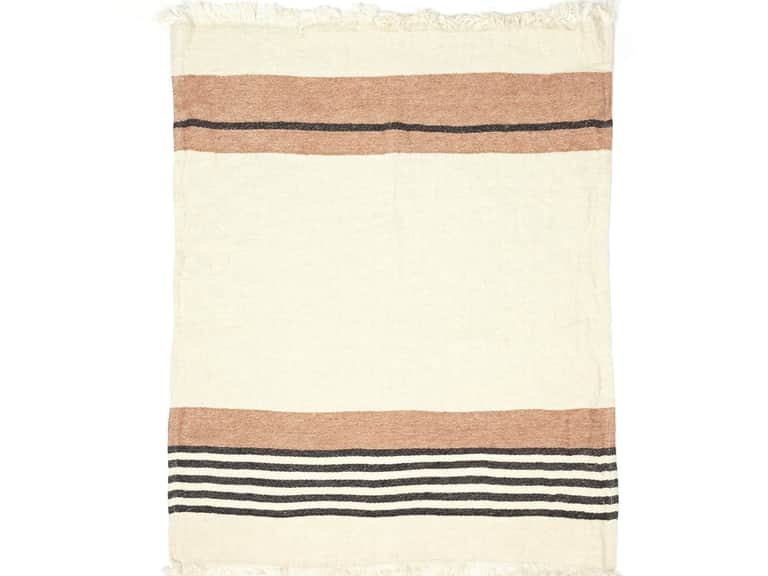
A sateen weave, such as the construction specified for The Belgian Towel Fouta Inyo 43x71", has a smooth, refined face created by the way yarns pass over and under one another. Here, the towel is described as 100% linen with a washed finish. That combination gives a sense of what to expect: a linen textile with a softened hand and a more fluid finish than an unwashed, crisp cloth.
Weave influences texture and drape, but it is only one part of performance. Yarn quality, fabric density, finishing, and the way a towel is used all matter too. “Absorbent” does not necessarily mean “plush,” and “lightweight” does not mean “incapable of drying.” A flatter towel may absorb moisture well while feeling quite different against the skin from a deep-pile bath towel. Consider the sensation you prefer, as well as the practical job the textile needs to do.
A natural companion for travel
Travel has a way of making a towel’s dimensions as important as its softness. A bulky towel can occupy a surprising portion of a weekend bag; a flatter one folds into a smaller, more orderly bundle. A linen fouta can be useful on a beach trip, at a pool, or in a shared changing space when you want a versatile layer that is easy to carry between stops.
Its size can offer more coverage than a small hand towel while still packing with relative ease. The 43-by-71-inch dimensions of the Fouta Inyo make it suitable for use as a beach or sauna towel, according to its product details. As with any textile, it is sensible to check the measurements against your own needs: a towel intended for a lounger, a wrap, or a compact travel kit may need a different balance of width and length.
For packing, let the towel dry completely before folding it away for a long journey. If it has been used and remains damp, give it as much air as possible rather than sealing it inside a bag. This simple habit helps prevent stale odors and keeps the rest of your luggage fresh. A towel that can serve more than one purpose also reduces the temptation to pack several bulky options for a short trip.
From beach bag to sauna
In a sauna, a towel is both practical and personal: it can provide a clean layer to sit on, offer modest coverage and help manage perspiration. A lightweight linen fouta suits this role when its size and care instructions fit the setting. Its flatter surface is easy to fold or drape, and it is less cumbersome to carry than a thick towel when moving between warm rooms and cooler air.
Use common sense around heat. Follow the sauna’s own rules about textile use, and avoid leaving a towel in contact with heating elements or other hot surfaces. Afterward, hang it open so moisture can escape. While linen is durable when cared for appropriately, repeated exposure to very high heat, harsh detergents or rough handling can still shorten the life of any fabric.
The same towel can travel from sauna to shower or pool, but it should be rinsed or laundered as needed rather than put away damp. If the setting involves oils, lotions or products that may mark fabric, deal with residue promptly and follow the maker’s care guidance. A multipurpose towel is at its best when its flexibility is matched by a little attention.
An easy layer at home
The most enduring household textiles are rarely confined to one room. A linen fouta can hang within reach in a bathroom, serve as a light wrap on a cool evening, or provide a casual layer over a bench or armchair. Its soft-edged drape brings texture without the visual weight of a thick blanket, making it an appealing choice in rooms where an extra textile should feel useful rather than formal.
On a warm day, it can be carried from the bathroom to a balcony or garden seat. In a guest room, a folded fouta offers visitors a spare layer for bathing, travel or lounging. For a small home, its ability to shift between purposes is especially practical: one well-chosen textile can do the work of a beach cover, a light throw and a bath companion, depending on the moment.
Styling is refreshingly uncomplicated. A loose fold over a chair back allows the linen’s texture to show; a neat stack on an open shelf makes it easy to reach. Because linen has a relaxed character, it does not need to be pressed into rigid perfection to look considered. Its small creases are part of its natural expression, not a flaw to be corrected at every turn.
Understanding absorbency without the fluff
Towel comparisons often begin and end with softness, but absorbency and comfort are not the same measure. Terry’s loops create a plush surface that many people love for stepping out of a bath or shower. A linen fouta offers a flatter contact and a lighter feel. Some people prefer the clean, quick-to-handle character of a woven towel; others want the enveloping sensation of pile. Neither preference is more correct.
The best choice depends on the setting. For a daily bathroom routine where warmth and cushioned softness are priorities, a thick terry towel may be the natural choice. For travel, beach days, sauna visits or layered home use, a lightweight fouta may be more convenient. It can absorb moisture while remaining relatively easy to carry, but it will not feel identical to a dense cotton bath towel—and it should not be expected to.
If a new linen towel feels less absorbent than expected, laundering can help remove residues left from finishing or storage. Follow its specific instructions and avoid fabric softener unless the manufacturer expressly recommends it. Softener can leave a coating on fibers and may affect how well a towel takes up moisture. Results vary by fabric and product, so care guidance should take precedence over generic rules.
Linen towel care, made simple
Care is less complicated than it may seem. The Fouta Inyo’s stated guidance is to machine wash cold on a gentle cycle with mild soap, avoid chlorine bleach, and line dry where possible. If using a tumble dryer, the instructions specify medium heat. For ironing, the recommendation is steam while the linen is slightly damp. Always check the care information supplied with the towel, since different finishes and constructions can call for different treatment.
A few habits help preserve the cloth:
- Wash with similar colors, especially when the towel is new or strongly colored.
- Use a gentle cycle and a mild detergent rather than an unnecessarily harsh wash.
- Avoid chlorine bleach, which can weaken or discolor fibers.
- Shake the towel out after washing and hang it with room around it so air can circulate.
- If ironing is desired, work while the linen is slightly damp and use steam, following the care label.
- Store it only when fully dry, in a clean, ventilated space.
Line drying is a gentle option and can help reduce unnecessary heat exposure. In damp or cool weather, give the towel plenty of time and airflow; a textile that feels dry at the surface may still hold moisture in folds. If using a dryer, follow the specified setting and avoid leaving linen in excessive heat. The aim is not to eliminate every crease, but to keep the fabric clean, dry and ready for its next use.
How to choose a multipurpose towel
Before choosing a fouta, picture the places it will actually go. A towel for travel benefits from a manageable folded size. One for the beach needs enough width and length to provide comfortable coverage. For sauna use, consider whether it is large enough for the intended seating or wrapping, and check any venue rules. For home, think about whether you want a bath towel, a light throw, or a textile that can move between the two.
Then read beyond the product name. Fiber content tells you whether the towel is linen, cotton or a blend. Construction and finish offer clues about surface feel and drape. Dimensions help you judge coverage, while clear care instructions indicate what regular maintenance will involve. A product description that identifies these details gives you a better basis for choosing than broad promises about softness or luxury.
Finally, consider your preferred towel experience. Linen can feel crisp or textured at first, depending on its finish, and may soften with use. If you love plush terry, it may work best as a complementary piece rather than a complete replacement. If you value compactness, natural texture and flexible styling, a linen fouta could become one of the most frequently used textiles in your home and travel kit.
A smaller footprint in the linen cupboard
Multipurpose design has an understated benefit: it can make household storage feel less crowded. A towel that works for the beach, sauna and occasional lounging does not need a separate replacement for each situation. That does not mean one textile should be asked to do everything. It means choosing carefully, using it in ways that suit its construction and caring for it so it remains useful over time.
Natural fiber alone is not a complete measure of environmental impact. How a textile is produced, transported, washed, dried and kept in service also matters. In practical terms, extending the useful life of a well-made towel is a sensible place to begin: wash it gently, dry it thoroughly and repair small issues when possible. Thoughtful use is more persuasive than a label or trend.
A quiet case for versatility
The linen fouta earns its place not through spectacle, but through adaptability. Its flatter weave and light, flexible form make it easy to carry, easy to fold and at home in settings that call for a towel with more than one role. It can be a beach essential in the morning, a sauna layer later in the day, and a relaxed throw once the evening cools.
That versatility comes with a clear point of view: less plushness, more portability; less bulk, more possibility. Choose a size suited to your routine, understand the weave and finish, and follow the care instructions. The result is a useful linen towel that feels as natural in a travel bag as it does draped over a chair—an everyday object with a quietly considered life beyond the beach.