Bedding · Fabric guide
How Libeco Bedding Layers Adapt to Every Season
A bed that feels inviting in July may need a little more substance by November. Understanding fabric weight, weave and finish makes it easier to build a linen bedding arrangement that can shift with the weather—without replacing the entire set every time the season turns.
Published November 7, 2026
Seasonal bedding is less about a dramatic changeover than a thoughtful adjustment. The same breathable foundation can serve throughout the year; what changes is the number, weight and arrangement of the layers above it. A light sheet and an airy coverlet may be enough on a warm night, while cooler temperatures invite an additional blanket or a more substantial layer that can be folded back when the room warms.
Linen rewards this kind of flexibility. Its tactile surface, relaxed drape and characteristic breathability make it a natural starting point for a bed that evolves with the climate. When considering Libeco bedding, or linen bedding more generally, the useful clues are not limited to color and styling. Fabric weight, weave, finishing and care instructions all help explain how a piece may feel in daily use and how easily it can work within a changing set of layers.
The most successful approach is to think in terms of function. Sheets sit closest to the body and shape the first impression of comfort. Coverlets and throws provide adjustable warmth and visual texture. A reliable layering scheme allows each piece to earn its place, whether it is needed every night or kept nearby for the occasional cool spell.
Start with the feeling of the bed
Before comparing weights or weave descriptions, consider what you want the bed to feel like. Some sleepers prefer a crisp, cool surface; others value a softer, more enveloping hand. Room temperature, bedding habits and personal preference all matter. Even the same fabric can feel different depending on its finishing, the density of its construction and how it has been washed over time.
Linen is made from flax fiber, and its appeal lies partly in its balance of character and practicality. It has a distinctive texture rather than the uniformly smooth surface associated with some other bedding fabrics. It can feel airy and dry to the touch, and it drapes with an easy, slightly relaxed quality. Many linen textiles also become softer with regular use and laundering, although the pace and degree of change depend on the fabric and its finish.
That softness is not the same as thinness. A substantial linen can still feel breathable, while a lighter cloth may have a crisp hand rather than a fluid one. The words “lightweight” and “soft” describe different qualities, so it is worth reading fabric details rather than treating one as a substitute for the other. Weight provides a useful point of comparison, but it does not tell the whole story of how a textile will feel against the skin.
What fabric weight can—and cannot—tell you
Fabric weight is often given in grams per square metre (g/m²) or ounces per square yard. It measures the mass of a defined area of fabric. In broad terms, a lighter cloth can make an appealing first layer for warm conditions, while a heavier textile may feel more substantial and offer a stronger sense of coverage. But weight should be read alongside construction and finish, not in isolation.
Two linens with similar weights may have noticeably different hands. One could be loosely woven and fluid; another may have a more compact structure and a firmer drape. A garment-washed or stonewashed finish may make a textile feel more relaxed from the outset, while an untreated or crisp finish can preserve a sharper surface. Fiber quality, yarn construction and the way the fabric is woven all contribute to the final result.
Weight is also not a direct measurement of warmth. Bedding warmth depends on the whole arrangement: the room, the sleeper, the layers in use and the way air moves between them. A breathable sheet under a light coverlet will behave differently from multiple dense layers tucked closely around the body. Rather than relying on a single number, use stated weight as one clue among several, and consider how each piece is intended to function.
- For a lighter feel: begin with a breathable sheet and keep the top layer easy to remove.
- For more coverage: add a coverlet or blanket that can be folded back as conditions change.
- For year-round flexibility: choose layers with distinct roles instead of relying on one heavy piece.
These are starting points, not rigid rules. A warm sleeper may prefer fewer layers even in winter; a cool bedroom may call for an extra blanket well before the calendar suggests it. The point of seasonal bedding is to adapt the bed to lived conditions, not to follow a prescribed formula.
Weave gives linen its character
Weave describes how yarns cross to form fabric. It affects texture, stability, drape and the way a textile presents itself on the bed. Bedding descriptions do not always provide a detailed weave specification, but when they do, the information can help set expectations. A more open construction may feel airy and relaxed; a denser one can feel more structured. Neither is automatically superior: suitability depends on the intended use and personal taste.
Look at construction details as part of the whole picture. A coverlet is designed to sit over sheets and can add a visible finishing layer without necessarily being the heaviest item on the bed. A throw is more versatile: it can rest at the foot of the bed, provide a little extra coverage or move to a chair when not needed. The names alone do not guarantee a particular warmth level, so check the listed material, weight and care guidance where available.
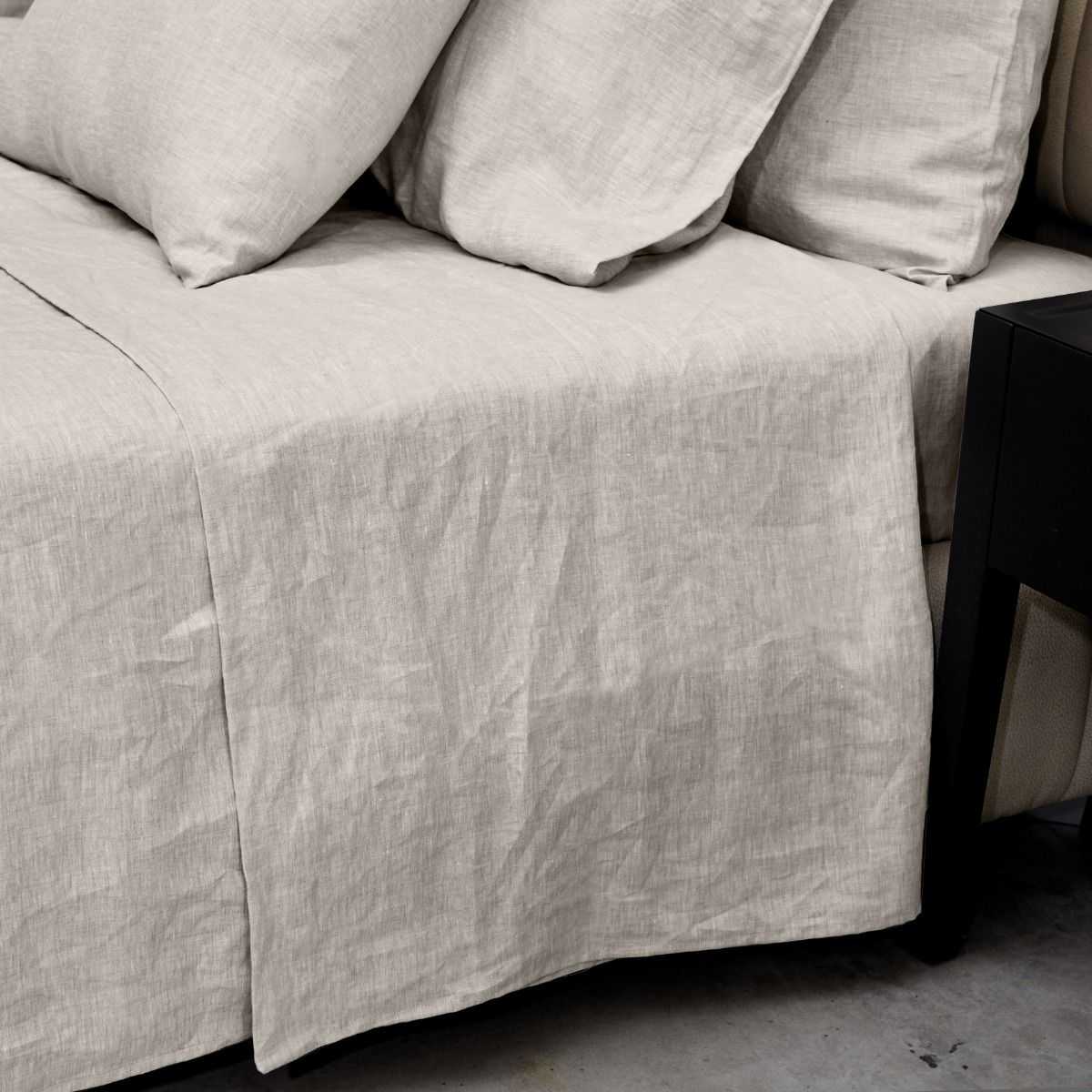
Texture also helps create depth in a restrained palette. A matte sheet beneath a washed coverlet, for instance, can make a bed feel considered without relying on an elaborate print. Linen’s natural irregularities are part of its visual vocabulary. Subtle variation in surface and drape can lend a room a composed, lived-in quality rather than the exact uniformity of a freshly pressed display bed.
A simple seasonal layering plan
Spring: keep the arrangement light and adjustable
Spring weather can change quickly, so a flexible combination works better than an all-or-nothing switch. Use a comfortable sheet as the foundation, then add a light coverlet that can be pulled up on a cooler night and folded down when the room warms. Keeping a throw within reach offers an easy extra layer without committing the whole bed to heavier coverage.
At this time of year, think about how the bed looks when it is partially turned down. A neatly folded layer at the foot adds texture and makes the arrangement practical as well as polished. The best layer is one you can move easily and launder according to its own instructions.
Summer: reduce bulk, preserve comfort
In warmer weather, a sheet may be enough on its own for some sleepers. If you like a little more coverage, choose a lightweight top layer that is easy to lift away. The aim is not to make the bed feel bare, but to avoid unnecessary bulk and give yourself options through warm nights and cooler mornings.
Breathability matters, but it is not a promise that any one fabric will keep every sleeper cool in every setting. Bedroom ventilation, humidity, mattress materials and individual comfort all play a part. Think of linen as one component of the sleep environment, not a substitute for adjusting the room or choosing an appropriate amount of bedding.
Autumn: build warmth in measured steps
As nights cool, bring back the coverlet and add a throw or blanket if needed. A gradual approach helps maintain versatility: start with one additional layer, then reassess rather than piling on everything at once. This also keeps the bed visually balanced. A heavier layer can be folded neatly at the foot during the day and drawn up at night.
Autumn is also a useful moment to inspect bedding before more frequent use. Check seams and hems, make sure layers are clean and completely dry before storing or remaking the bed, and review each care label. A little preparation helps preserve the condition of textiles through the months when they are used more often.
Winter: layer for the room you have
When temperatures fall, a more substantial coverlet or additional blanket can add the sense of enclosure many people enjoy. Rather than assuming that linen has to be replaced by another fabric for winter, consider how linen can remain the base of the bed while warmer layers are placed above it. The underlying sheet maintains a familiar surface; top layers provide the extra coverage.
Pay attention to how the layers sit together. Multiple pieces that bunch or slide can make a bed less comfortable, so choose sizes that give adequate coverage and arrange them in an order that is easy to adjust. If the bedroom is heated, a lighter combination may still be enough. Seasonal comfort is personal, and the room’s actual temperature matters more than the month on the calendar.
Finishing changes the first impression
Finishing is the treatment applied to fabric after weaving and can significantly influence its appearance and hand. A washed finish often gives linen a softer, more relaxed look from the beginning. Stonewashing is another finishing term that may appear in product descriptions and is associated with a softened, lived-in character. A garment-dyed textile may show nuanced color variation, which can contribute to a natural, less uniform effect.
These words are useful, but they are not guarantees of identical performance from one maker or textile to another. A finish does not replace details about fiber content, fabric weight or care. It is best understood as one part of the description: a hint about texture and appearance that should be considered alongside how the piece will be used.
For a calm bedroom, finishing can do much of the stylistic work. A relaxed linen surface pairs naturally with simple bedding and an uncomplicated palette. If you prefer a crisper look, select a sheet with a firmer hand or use a neat fold at the top edge. The room can feel refined without asking every layer to match exactly; variation in texture is often more engaging than a perfectly coordinated set.
The sheet is the constant; the top layer is the variable
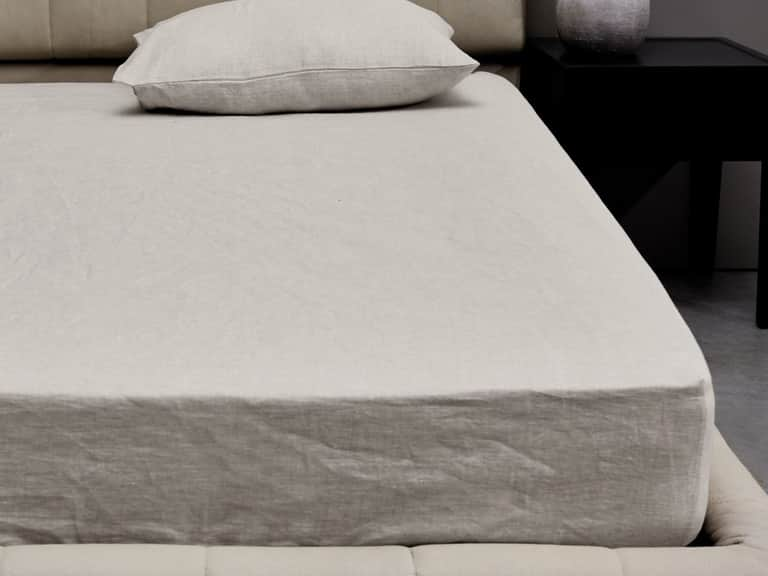
A practical seasonal set begins with a sheet that feels comfortable in regular use. Flat sheets offer flexibility in how they are tucked and layered; fitted sheets are designed to sit securely over a mattress. Fit matters, especially when mattress depth or a mattress topper affects the amount of fabric required. Confirm sizing and pocket depth where those details are provided, and check that the sheet suits the bed before making it part of a permanent arrangement.
Once the foundation is settled, use coverlets and throws to make the seasonal adjustments. A coverlet can provide a clean, continuous layer over the bed, while a throw is easy to move and useful for targeted warmth. These pieces can also help bring together different textures. A smooth sheet, tactile linen coverlet and smaller accent layer can create dimension without making the bed feel overworked.
Color can be equally adaptable. Neutrals and muted tones layer easily across the year, while a deeper or more saturated accent can bring a sense of autumn or winter without changing the entire set. Let the fabric’s texture remain visible. Linen’s appeal often comes from the way it falls and softens, not from an abundance of decorative detail.
Care is part of seasonal planning
Good care helps bedding remain useful from one season to the next. Linen instructions vary by product, so the label or maker’s guidance should take precedence over a general routine. Some linen bedding may be washable at a moderate temperature with a mild detergent; other pieces may have specific cycle, drying or ironing requirements. Avoid assuming that every linen item can be treated identically.
In general, avoid overcrowding the washing machine. Fabric needs room to move, and a smaller load can help reduce excessive creasing. Use detergent appropriate to the textile and avoid chlorine bleach unless the care guidance explicitly permits it. When tumble drying is allowed, follow the stated temperature and remove the item promptly rather than leaving it to overdry. Line drying can be a gentle option where practical.
For a softer, relaxed appearance, linen may not need to be pressed. If a more tailored finish is preferred, use steam while the fabric is slightly damp, if the care instructions allow. Over time, laundering can change a textile’s hand, so a gentle routine is preferable to aggressive treatment. Always make sure bedding is fully dry before placing it on the bed or storing it; lingering moisture can compromise freshness.
Between seasons, store clean, dry layers in a breathable, dry place. Avoid sealing damp textiles away, and keep the storage arrangement simple enough that pieces can be found and rotated easily. A well-managed set needs no elaborate system: separate the lightest layers from the heavier ones, and keep the pieces used most often within easy reach.
Questions worth asking before choosing a layer
When comparing linen bedding, product descriptions are most useful when they answer practical questions. Look for the stated fiber content and weight, the type of piece, any finish or construction details, and clear care instructions. If you are considering a fitted sheet, check its sizing and mattress depth. If you are considering a coverlet or throw, think about the area it needs to cover and whether it is intended to provide everyday warmth or occasional extra coverage.
- What is the fiber content? Confirm whether the piece is linen or a blend, rather than inferring from its name.
- Is a weight listed? Use it as a comparison point, not as a complete prediction of warmth or softness.
- What does the finish suggest? Washed, stonewashed or garment-dyed descriptions can help you anticipate the look and hand.
- How will the piece be used? Distinguish a sheet, coverlet and throw by their intended role in your arrangement.
- Can you care for it as directed? Check washing and drying requirements before adding a textile to a frequently used set.
These questions keep the decision grounded in use rather than marketing language. They also make it easier to compare bedding from different collections without assuming that similar names or colors mean similar construction.
A bed that changes without losing its character
Seasonal bedding works best when it is both tactile and practical. Begin with a sheet that feels right, then add layers in a way that lets you respond to warmer afternoons, cool evenings and shifts in bedroom temperature. Fabric weight offers a useful clue; weave and finishing help explain texture and drape; care guidance indicates whether a piece will suit your routine.
Libeco bedding can be considered within this broader linen conversation: not as a single formula for every climate, but as an invitation to notice material and construction. A washed surface, a particular weight or a more structured weave can affect how a piece sits within a layered bed. Read the specifics of each textile, and let those details guide the arrangement rather than relying on the season alone.
With a breathable foundation, a coverlet that can be added or removed, and a flexible accent layer close at hand, the bed can feel composed throughout the year. The result need not be complicated. A few well-chosen pieces, cared for according to their individual instructions, can offer the quiet luxury of comfort that adapts—one layer at a time.